What a star break is
A star break is a rock chip with a small impact point in the middle and several short cracks, or legs, radiating out from it. Up close it looks like a tiny starburst. It happens when a stone hits the windshield hard enough to fracture the outer layer of glass in several directions at once.
Star breaks are one of the most common types of damage we see in North County, along with bullseye chips and combination breaks that mix the two. If you are not sure which you have, our guide to types of windshield damage has the differences.
Why star breaks spread fastest
A bullseye is a round pit. A star break is a cluster of cracks that have already started. Each leg ends in a sharp tip, and glass is weakest at the tip of a crack. When the windshield flexes or changes temperature, the stress collects right there.
That means a star break gives a crack several places to start instead of one. Things that commonly set it off:
- Temperature swings. A dark dashboard heating up in an inland parking lot, or a defroster aimed at cold glass on a foggy coastal morning.
- Road vibration. Freeway expansion joints, rough frontage roads and speed bumps flex the glass.
- Body flex. Slamming a door or driving with a wheel up on a curb twists the body slightly, and the windshield moves with it.
- Pressure on the glass. Car washes, ice scrapers on mountain trips and leaning on the windshield all push on the legs.
Some star breaks sit quietly for months. Others run the same afternoon. There is no reliable way to predict which, and once a leg turns into a long crack, repair is usually no longer possible. More on that in will a windshield chip spread?
How we repair a star break
Star breaks take more care than a simple pit, because the resin has to reach the very end of every leg. A fill that stops short leaves the tips open, and the break can keep growing from there.
- Check every leg. We look at how far each crack runs and whether any has started to lengthen.
- Clean out the impact point so the resin has a clear path into the legs.
- Draw out the air. A vacuum cycle pulls air and moisture out of the legs. This is the step that decides how clear the finished repair looks.
- Push resin to the tips. The advanced anaerobic polymer resin is worked under pressure into each leg, and we watch until every one has filled.
- Cure, seal and polish so the surface is smooth under your wipers.
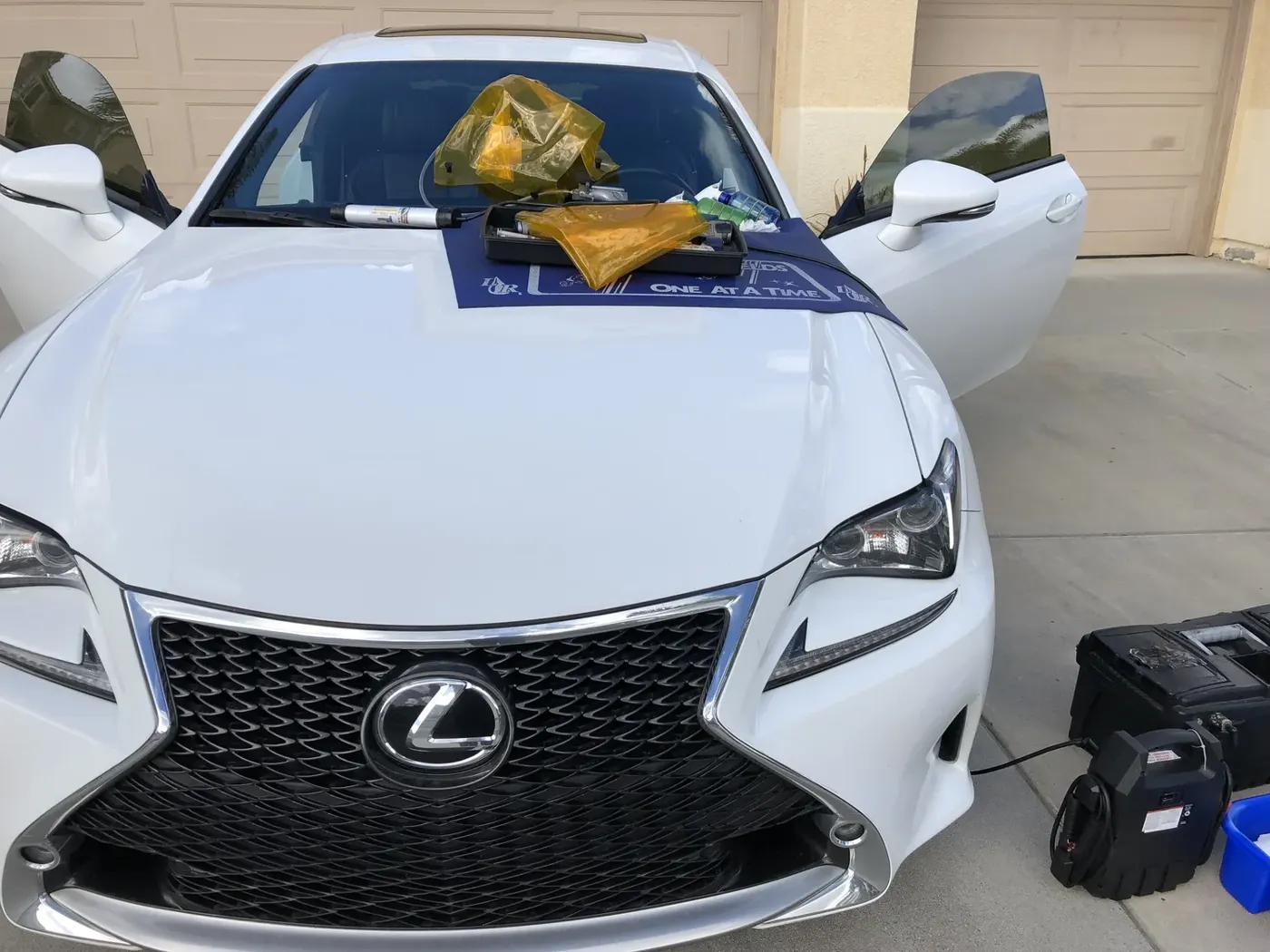
Most star break repairs take about 30 minutes, at your home, office or wherever the car is parked.
Quarter test for star breaks
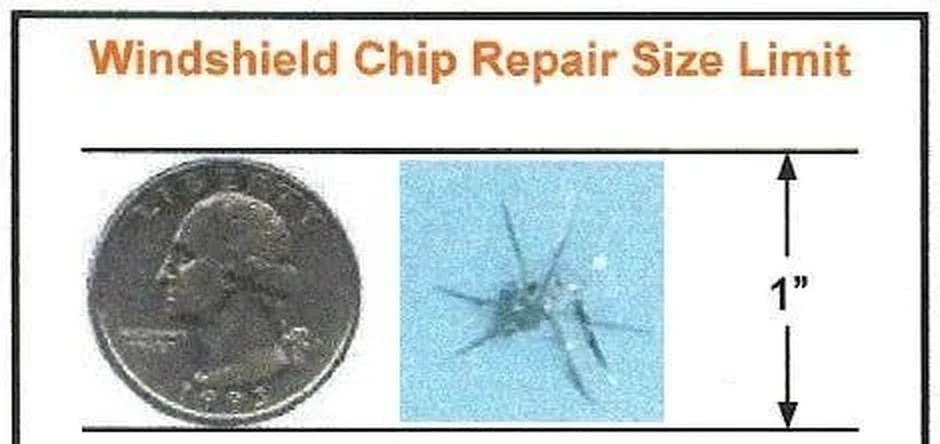
Use the whole star, legs included, when you do the quarter test. If a quarter covers the impact point and all the legs, the break is most likely repairable. If one leg sticks out well past the coin, it may have started turning into a crack. Text a photo with the quarter beside it to 760-500-9281 and you will get a straight answer.
What to do until it is repaired
| Do | Avoid |
|---|---|
| Put clear tape over the break to keep it clean and dry. | Car washes and pressure washers. |
| Park in the shade or a garage. | Aiming the defroster or air conditioning straight at the glass. |
| Close doors gently. | Slamming doors and hitting speed bumps fast. |
| Call or text to book a repair. | Waiting to see if it spreads. |
The cost of waiting
Repairing a star break costs a small fraction of a new windshield. Replacement for a modern car or SUV runs $600–$1000+, and more if the glass has sensors, an antenna or a defroster grid. Repair also keeps your original factory seal, because the windshield never leaves the car.
Every repair is guaranteed for the life of the vehicle, with a 100% money-back guarantee that the repaired star break will not spread.
Book a star break repair
We repair star breaks across North County San Diego, from Encinitas on the coast to Escondido inland. Call (760) 500-9281 or text a photo, Monday to Saturday, 9am to 5pm. Same-day service is often available. See how we handle other chips on the main rock chip repair page.